

The quick definition of menhera kei
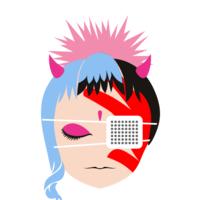
Menhera kei (メンヘラ系) bands are visual kei bands from the 2010s onward who focus on topics like mental illness, suicide, self-harm, and sexual deviancy, as if from the perspective of the fans themselves. They often wear costumes comprised of ready-made pieces, in minimal colors.

A brief history of menhera kei
Themes of suicide and insanity have been prevalent in visual kei since its inception. In particular, Kuroyume (黒夢), merry go round, and Deshabillz were early 1990s bands that all toyed with these themes, and directly inspired the dark kote kei (コテ系) subgenre.


Kote bands tended to be sadistic and fantastical in their approach to these themes. That is, they tended to play insane characters from some other world, who were violent toward the audience. There was a clear hierarchical separation between the band and the fans, with many bands referring to their fans as “slaves,” “worshippers,” and so on.
In the early 2000s, it became common in online forums like 2ch for users to discuss their depression, mental health issues, and self-harm escapades. These users [primarily female] became collectively known as menhera. And as social media grew, that term shifted from something that was negative to something “trendy”—the term was worn almost as a badge of honor.
Of course, it's only natural that there would be a large overlap between visual kei bangya (who are by definition attracted to dark themes) and menhera.

Menhera culture made the leap from visual kei fans to visual kei bands in the early 2010s, and one of the most prominent figures from that era was R-Shitei (R指定). They had been active for years as a Showa kayou kei (昭和歌謡系) band (in the lineage of the GazettE), but gradually directed their concepts toward mental illness and sexual deviancy.
In their 2012 single, they declared: I AM MENHERA (アイアムメンヘラ).

That single captures the essence of menhera kei: it is sung from the perspective of a young, mentally-ill outcast, who uses wristcutting (and suicide) to escape the despair of normal existence. In other words, rather than the fantastical sadism of kote kei (コテ系), it is realistic masochism, and the conceptual barrier between fan and band is destroyed.
That theme continued through the band's following works, including Seishun wa WRISTCUT (青春はリストカット) {Youth is Wristcutting}, which introduced a simulated wristcut furitsuke that fans performed during the song. Such furitsuke quickly became standard for menhera kei.
The success of R-Shitei (R指定) and popularity of menhera in the zeitgeist led to a wave of similarly-themed bands over the following years.
The sounds of these bands fell into several camps. Many, like SHELLMY (シェルミィ), followed in the Showa kayou kei (昭和歌謡系) lineage of the GazettE. Others, like DEZERT, picked up nu-metal as introduced to loud kei (ラウド系) by DIR EN GREY. A few, like Sick², ironically played with kirakira kei (キラキラ系) esque electronics. And AvelCain took cues from Kuroyume (黒夢), as directed by their producer Eve.


Mid-way through the decade is when menhera bands appeared that were inspired by earlier menhera kei bands. Most of these referenced R-Shitei (R指定) or AvelCain—as was the case with Gozen Reiji。 (午前零時。) and AkaKU SoMATTA Kioku (紅ク染マッタ記憶), respectively. Others, like DAMY, played nu metal, but used DEZERT as their reference. And a few non-menhera bands, like the previously-lynch.-esque SCAPEGOAT, abruptly changed up their sound to fit into menhera kei.


The peak of the subgenre would have been from around 2016~2019 in terms of numbers, but menhera kei bands continue to exist as of 2025. They also seem to have become disproportionately popular among Western fans, with bands like gulu gulu, Kane to Juusei (鐘ト銃声), and Kebyo (仮病) becoming the targets of love and hate by young overseas fans.


The long-running menhera kei band DEZERT (formed in 2010 but active in earnest from 2013) went major in 2023 and performed at the legendary Budoukan (武道館) in December 2024. And R-Shitei (R指定), who paused activity in 2019, seems poised for a return in 2025. It remains to be seen if an influx of new menhera kei bands will follow.

Why is it called menhera kei?
The term allegedly originated in the online BBS 2ch, on a board called mental health ita (メンタルヘルス板) {mental health board}—menheru (メンヘル) {men[tal] heal[th]} for short. There, users would discuss their depression, self-harm, and other mental afflictions.
Over time, the [largely female] users who participated in that board became referred to as menhera (メンヘラ) {men[tal] heal[th]ers}.
In Japanese, it is common to attach an -er/-ers suffix to indicate that someone does something, or is a fan of something; for example, fans of the band AILE are called AILE-ers (アイラー). So the term menhera was a disparaging, flippant way to refer to someone who dealt with the types of mental issues that were common on that board—but as menhera culture was popularized and commercialized by the 2010s, it became almost a badge of honor among the sick.
Menhera kei (メンヘラ系) {menhera style}, then, literally just refers to bands who adopt a menhera-like persona.
What are the other names for menhera kei?
None, although many bands overlap with kote kei (コテ系), loud kei (ラウド系), Showa kayou kei (昭和歌謡系), and so on.
What does menhera kei look like?
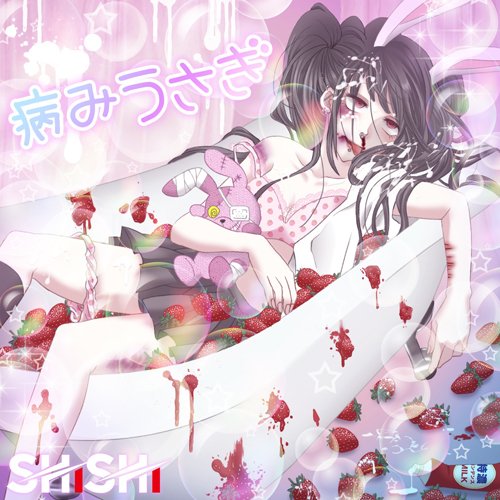
Simple silhouettes created by layering dress shirts, long tshirts, suit jackets, coats, skirts and other non-descript clothing items. Color palettes are generally restricted to blacks, whites, and reds. Only rarely borrows elements from yami kawaii (病みかわいい) fashion (fans are more likely to dress in this way). Members often have bloody noses, bruises, red eyes, eyepatches, bandaged wrists, and so on. Some incorporate child-like elements such as backpacks or lollipops to create disturbing dissonance.


Photoshoots often rely on styling, posing, location, and/or props for visual interest. Umbrellas, large knives, razor blades, dolls, nooses, and shibari appear frequently; band members are often in unusual positions on the floor and likely barefoot; and locations include mental hospitals, basement-like rooms, or bathrooms.




What does menhera kei sound like?
Often crafted with the live experience in mind; very clear sections for headbanging and wristcutting furitsuke. Vocals are typically less playful than osare kei (オサレ系) but feature a range of odd sounds. Generally violent in sound; lyrics include terms like yami (病み) {diseased}, itami (痛み) {painful}, wristcut (リストカット), etc. Self-centered except when speaking about objects of romantic obsession.
Is menhera kei a legitimate visual kei subgenre?
Yes.
Menhera kei alignments
Almost always rock; occasionally tongue-in-cheek pop.
Realistic emotions heightened to unrealistic levels.
Costumes often use ready-made clothing.
Rarely concerned with displaying specific technique.
More likely to participate with live attendees.
Always angry, sad, or maniacal.
Slightly more likely to be manic.
Immature in sound and concept.
When was menhera kei active?
It started around 2012 and its peak was around 2016~2019, but exists as of 2025.
What are the representative menhera kei bands?
Early: R-Shitei (R指定), AvelCain, DEZERT
Later: gulu gulu, Kane to Juusei (鐘ト銃声)
Edit History
- 2025-02-19: revised wording about costumes
- 2025-02-19: added missing promo
- 2025-02-19: added missing Spotify
- 2025-02-20: typos
- 2025-03-02: typos
- 2025-08-20: updated disclaimer
What is menhera kei?
2025-12-20
Approve Edit Unrestrict Delete Lock threadWhat is menhera kei?
2025-08-25
Approve Edit Unrestrict Delete Lock threadWhat is menhera kei?
Appreciate the articles in general, but contrary to the first few well written articles, a lot of recent ones (especially this one) contradict the FAQ statement and read like personal biases and/or (wrong) western online information to me. I don't understand why this guide tries to make it look like "official", "neutral" or "heavily sources" (or is this a joke I don't get?).
The most (or second most after R指定) famous メンヘラ group isn't even mentioned in the entire article: 0.1gの誤算. Contrary to Japan, this band has little attraction overseas underlining the general feeling that the article is purely written from a western point of view and not from the actual Japanese scene point of view. Don't get me wrong, this is definitly not a hating comment, just a critical comment to a possible future source that claims itself as neutral / heavily sourced.
Some more additions: What is written about R指定's 2012 single was already done by 蜉蝣 in 2000 with リストカッター. What is written in the note about "without cloying sentiments like “it will be alright.”" was already done by ムック way earlier, for example in 絶望.
Agreed that R指定 shifted the theme more into focus in song titles (around 2009 SCISSOR CUT, メンタル≠ヘルプ etc.) and also on CD covers (裏音源盤。), making the connection to school girls. Everything exploded with their MV for 毒盛る in 2011, which fully released the genre in the main stream visual kei.
I would assume DEZERTs influence was D'espairsRay and not DIR EN GREY. In my opinion, DIR EN GREY did not introduce nu-metal, this was done by ムック way earlier (or maybe other bands). DAMY started more as a Crazy★shampoo inspired band but adapted a DEZERT-like style quickly.
2025-02-20
Approve Edit Restrict Delete Lock threadThank you for the comment. These are valid concerns and I would like to address each one:
Regarding biases: while writing these articles I very intentionally did not just write down what I thought I knew, and instead sought out Japanese sources. (And in fact, there were many times that I found my preconceived biases to be wrong.) So when I say “not based on personal bias” in the FAQ, I mean that I very purposely tried to avoid writing from that perspective.
That being said, it was not my intention to present myself as 100% free from bias, or 100% successful in my goals—I am human! Nor was it my intention to imply that “these articles are 100% correct and if you disagree you're wrong.” I tried to make those stances clear in the FAQs and certain sections of the articles, but I will re-evaluate my language.
Regarding the word “official:” my intention with that word was to signify that this is an official resource from vkgy (as opposed to the thoughts of someone who happens to be a vkgy user). It's never my intention to present anything vkgy does as “speaking for all of visual kei”—I can only speak for vkgy as an organization. I'm happy to re-evaluate my use of that word.
Regarding your feelings on the later articles: these articles were based on Japanese sources—and, admittedly, there are fewer sources to draw from for newer subgenres. You're right, the narrow focus of menhera is due to lack of good sources. If you (or anyone reading this) has other good Japanese sources about these subgenres, please send them my way so that we can improve these articles for future readers.
Regarding 0.1g: I missed the mark there and will plan to integrate more about them in the future.
Regarding Kagerou/MUCC: I didn't intend to imply that R-Shitei was the first band to ever do these things, but that the tropes of the subgenre were typified by them. I'll re-evaluate those sentences in the future.
Regarding DEG/MUCC: it has been on my to-do list to expand on MUCC's influence in the nu metal sound. I agree I dropped the ball there.
Just to make my stance clear: my goal with these articles is not to “trick people into believing my opinions as fact,” nor to present these as “the singular truth about visual kei.” I only want to present the most complete and most factual resource that I can produce at this point in time—and to continuously update it to make it more complete and more factual, with the help of the community.
Thanks again for taking the time to share your concerns. I hope that this somewhat addresses them.
If anyone reading this has suggestions or corrections, please send them to me (along with a Japanese source backing them up), and I will take them on board. I am much more active on Discord (it may take me several months to get back to any comments here).
2025-07-28
Approve Edit Restrict Delete Lock threadWhat is menhera kei?
ive known about the menhera community for a few years, but i never knew it's vkei history!! great read
2025-06-27
Approve Edit Restrict Delete Unlock threadWhat is menhera kei?
2025-06-04
Approve Edit Restrict Delete Lock threadWhat is menhera kei?
my main fav genre, love the blog btw <3
2025-05-24
Approve Edit Restrict Delete Unlock threadWhat is menhera kei?
very well explained, learnt a lot more
2025-05-17
Approve Edit Restrict Delete Unlock threadWhat is menhera kei?
def my fav substyle I guess it's called? really cool fashion and music
2025-04-06
Approve Edit Restrict Delete Unlock threadWhat is menhera kei?
my favourite
2025-03-30
Approve Edit Restrict Delete Unlock threadWhat is menhera kei?
I love this genre so much!! I highly recommend the Menhera-Chan manga by Ezaki Bisuko if you're into this kind of stuff, it has a great story and cute art style.♡ ♡
2025-03-08
Approve Edit Restrict Delete Unlock threadWhat is menhera kei?
I loved the article
2025-03-06
Approve Edit Restrict Delete Unlock threadWhat is menhera kei?
2025-02-28
Approve Edit Restrict Delete Lock threadWhat is menhera kei?
2025-02-27
Approve Edit Restrict Delete Lock threadWhat is menhera kei?
i love menhera kei so much its my fav!!
2025-02-24
Approve Edit Restrict Delete Lock threadWhat is menhera kei?
what about Amai Bouryoku (甘い暴力) tho
2025-02-24
Approve Edit Restrict Delete Lock threadWhat is menhera kei?
2025-02-24
Approve Edit Restrict Delete Lock threadWhat is menhera kei?
I LOVE THIS STYLEEE besides iryou kei
2025-02-21
Approve Edit Restrict Delete Lock threadWhat is menhera kei?
been waiting for menhera kei !! my absolute fav that got me into vkei :3
2025-02-20
Approve Edit Restrict Delete Lock threadWhat is menhera kei?
2025-02-20
Approve Edit Unrestrict Delete Lock threadWhat is menhera kei?
代表者は、R指定ですよ☆
2025-02-20
Approve Edit Restrict Delete Lock threadWhat is menhera kei?
favvvv genre... awesome article
2025-02-19
Approve Edit Restrict Delete Unlock thread