

What is this series?
This series of articles is vkgy's official guide to the history and context of visual kei and its subgenres. Like any attempt to classify culture into neat boxes, this series is not perfect—but we hope it will serve as a neutral reference for the visual kei fandom.
How is this different from other subgenre lists?
In an attempt to address concerns with existing subgenre lists, we took the following measures:
-
Only Japanese sources were consulted (except in cases where only non-Japanese sources would be appropriate). These included books, magazines, research papers, interviews, TV programs, and writings from visual kei researches and musicians. When appropriate, blogs, tweets, BBS posts, and portal sites were consulted.
-
As much as possible, the text was based on those sources rather than the author's preconceived ideas. (We are human, so the text will never be perfect in that regard.) We attempted to very clearly note when something was based on conjecture or when there were differing opinions about something.
-
We broke each article into discrete parts to cover the totality of the subgenre: a definition, brief history, exploration of legitimacy, explanation of name, and summary of look and sound.
-
We wrote each article with the goal of summarizing the way that Japanese fans/musicians/media view each subgenre, and distilled those summaries into concise definitions with clear boundaries.
-
The guide was never intended to be “perfect,” and we expect it to change and grow over time, and each article has an Edit History section to reflect this. (If you find a mistake or can provide additional context about something, please contact us with the details and a Japanese-language source supporting those details.)
What makes this list of subgenres “correct?”
To be blunt, there is no such thing as “correct” when it comes to genres and subgenres: they are attempts to neatly categorize artists over periods of time, which is a messy and imperfect endeavor.
Additionally, there is at least some degree of subjective opinion involved, which is based on each person's experience. One person who was a real-time fan of visual kei in 1993 may consider it a completely different genre than another person who was a fan at the same time.
As such, we do not claim to be the only correct subgenre list, nor do we claim that anyone who disagrees with this list is wrong—after all, these articles are not “rules” but “observations.” We do, however, believe that this is the most complete and researched list currently available.
Is visual kei a genre?
It is often argued that “music genres describe sounds, and visual kei sounds like anything, so it can't be a genre.” Neither argument is completely true:
First, genres do not just describe sound. A genre may encompass a wide range of sounds, as well as time periods, physical locations, rituals, and cultural norms. Rock, pop, electronic, and heavy metal all have very-wide-reaching definitions, but are still useful as genres.
Second, visual kei could theoretically sound like anything, but it doesn't. There is no hip-hop branch, for example. And visual kei bands tend to “sound visual kei,” even compared to the genres they borrow from. This is why one can tell from sound alone that DIVERS † CROIX (色々な十字架) is parodying visual kei, or that JILUKA isn't a typical hardcore band.
Additionally, visual kei has long been treated as a genre, with its own magazines, record stores, live venues, and so-on. Even normal record stores [in Japan] had visual kei sections—and one did not find SEIKIMA-II (聖飢魔II) or Poison in them despite those bands' over-the-top looks.
In other words, yes, for all intents and purposes, visual kei is a genre. You may view it as a scene instead, but there is little point in this distinction.
Is visual kei a subculture?
It is probably more correct to say that there is a bangya subculture associated with visual kei. See okeshou kei (お化粧系) and the upcoming visual kei article for some discussions about this.
Is visual kei a fashion style?
Short answer: not really, although it is increasingly viewed as such by Western fans. See visual kei (ヴィジュアル系) for a small discussion.
Does visual kei actually have subgenres?
Insofar as visual kei is a genre, it has subgenres. Of course, some are more “valid” than others—iryou kei (医療系), for example, has just a handful of applicable bands but is included in subgenre lists purely out of convention.
Each article in our guide has a section titled “is [xxx] a legitimate visual kei subgenre?” that attempts to give the context behind its inclusion. (This idea was borrowed with permission from cultic.)
Is every visual kei band part of a subgenre?
No. It is perfectly fine to say that a band is simply visual kei. Most bands do not self-identify as being part of a particular subgenre.
What is vkgy's definition of a subgenre?
We view a visual kei subgenre as a group of bands who look and/or sound similar, and have similar influences. This shared style must also persist for multiple years, across many bands.
In other words, wearing kimono for just one album does not make a band wafuu kei (和風系), nor does the appearance of four bands in decora fashion in 2006 indicate the existence of a “decora kei” subgenre.
Why are the subgenres organized by year?
Subgenres did not form in alphabetical order, and generally appeared only in response to earlier trends. We wanted someone going through the subgenres for the first time to have this important context.
How did you decide the “start date” for each subgenre?
It's somewhat arbitrary, as the real-time formation of subgenres is chaotic and unintentional. For our purposes, we tried to choose the year in which the subgenre was more than just a few bands.
What are the eras of visual kei?
We generally agree with the eras as laid out in VISUAL ROCK PERFECT DISC GUIDE 500: [1980~1989] pre-visual kei; [1990~1994] dawn of visual kei; [1995~1999] golden age of visual kei; [2000~2004] visual kei ice age; [2005~2009] neo visual kei; [2010~today] “modern” visual kei. We also acknowledge that post-COVID may be re-evaluated as a distinct era. Please see visual kei (ヴィジュアル系) for an explanation of these eras.
Why are “angura kei,” “eroguro kei,” and “neo visual kei” missing from the list of subgenres?
In short, all three are gravely misunderstood among the Western fandom and not actually useful as classifications. Please see the list of non-subgenres for a longer explanation for each.
Why is “[xxx] kei” missing from the list?
If you were expecting a certain subgenre in our guide but don't see it, it is probably not considered a legitimate subgenre by actual Japanese fans and musicians. You might instead find it on the list of non-subgenres.
How did you decide which subgenres to include?
We included only subgenres that: are broadly recognized by Japanese fans/musicians; have useful, mostly-agreed-upon definitions; and have several member bands over several years. Context and caveats can be found in the “is [xxx] a legitimate visual kei subgenre?” section in each article.
Who designed the artwork?
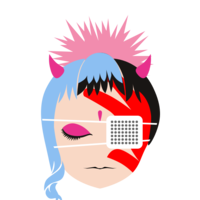
The super-talented darrylpyon designed and illustrated all subgenre chibis, based on reference photos from each article. vkgy has exclusive permission to use all chibis. Most of the headers were designed by inartistic; except for kurofuku kei (黒服系), which was designed by freya.
What are your sources?
This guide exclusively uses Japanese sources in the form of: books; magazines; flyers; research papers; interviews with musicians and stakeholders; articles from visual kei researchers; and accounts from real-time fans. A number of these are listed in the selected sources. A full list of sources may be published as an appendix in the future.
You got something wrong; how can I suggest a correction?
First, please find high-quality source(s) for your suggestion. These should be links to text (or pictures of text); originally in Japanese; from a researcher, journalist, bandman, real-time fan, or similar. Then, please contact us on Discord, in the #research channel, with your suggestion and source(s). Any accepted corrections will be noted in the article.
Edit history
- 2025-01-07: typos
- 2025-08-20: edited first few sections to [hopefully] sound less self-aggrandizing








































































FAQs: guide to visual kei
on the kote kei official playlist on spotify, the description shows 'tanbi kei' instead of kote kei !!
2025-05-27
Approve Edit Restrict Delete Lock threadThank you! This has been fixed.
2025-08-21
Approve Edit Restrict Delete Lock threadFAQs: guide to visual kei
Unfortunately, we don't currently have plans (or time) to create a list of terms.
2025-08-21
Approve Edit Restrict Delete Lock thread